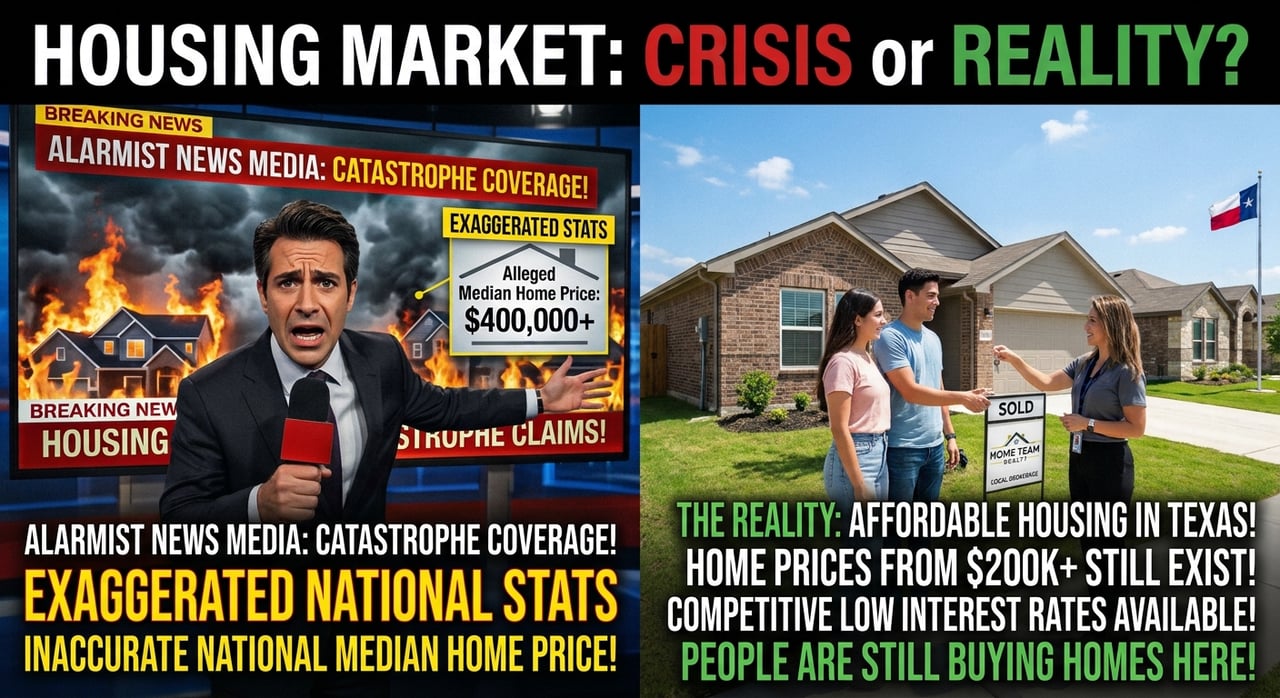
Housing Market and The Affordability Crisis - What’s Happening?
This is something I have been seeing for a while now. I just saw this clip on Facebook this morning from ABC News and I decided to put my 2 cents into the conversation. After all, I have been in the Real Estate Business for over 23 years. I have seen the ups and downs of the market. This is a topic that continues to come up and puts fear into the market. Check out the link, and then you will understand where my comments and reaction are coming from.
First of all, just to make sure I am fully transparent, I am a Real Estate Broker working in the Texas Real Estate Market. I have been through several ups and downs in the market, including the 2008 Crash. There were a lot of factors that went into that as well, that were not reported such as higher gasoline prices, utility cost, etc.
In today's market, there are alot of factors that contribute to affordability. In the article, it talks about going back to when numbers were first reported in 2001. Well, I think we can all agree that everything has gone up since 2001, including the price of vehicles, wages, food, utilities, etc. I remember when gas was less than one dollar per gallon! That was a long time ago. Of course, if you are paying more to fuel your vehicle, that takes into account how much you will have left over at the end of the day for other necessities like housing, utilities, food, etc.
In 2001 for example, you could probably purchase a new vehicle for $15,000 or less. That price has almost doubled in today’s market. Gas prices in 2001 were $1.32 in Texas according to this article. You can see your state as well. It is more than double that price now. This price isn’t something that has just happened within the past 2 years. It happened back towards the end of 2020 - gas prices went up. Check out this chart on inflation cost. It is very interesting.
Another factor in affordability, is Insurance cost. When I purchased my first home in Houston in 1998, my insurance cost was $1200 a year for a $125,000 value. That same insurance today would cost between $1500 - $1800 per year. That may include windstorm, I would need to double check with an insurance carrier. When I hear people, even in this article talked about affordability, I do not hear anything about insurance.
My husband and I were talking this morning, back in 2001, most people were not paying $5-$8 for a cup of coffee. That’s expensive! When I was buying my first home, I knew I had to do a few things to make it happen. Things I needed to sacrifice like eating out, budgeting, saving money, paying off credit card debt, and I even moved into a less expensive rent house for a year so I could save. This helped me to have a down payment and be ready to take on the responsibility of homeownership. The same things are required today.
Moving on, this article states that the median house price in today’s market is $400,000. This may be the case in some areas, but in Texas you can get a home for half of that amount. There are homes that have been previously occupied, or even new construction that would cost $200K or in the $200’s. There are even some properties priced lower than that. Affordability is all about where you live, not just about housing prices and interest rates. Texas is a very affordable place to live.
Interest rates vary, according to what you are buying. If you are buying new construction, as of last month, interest rates were in the 5’s. Builders offer other incentives as well, including paying buyer’s closing cost. One great thing about New Construction is you shouldn’t have to worry about any major repairs for several years, making this a great option for first time home buyers, seasoned buyer’s, etc. There are all types of loan products, even if you do not have a lot of money saved. You can get an FHA loan for 3.5% down. Sometimes seller’s are willing to pay a portion of buyer’s closing cost. Conventional loans usually require 5% down. There is additional insurance lenders place on the loans if you do not have 20% down. However, I do know of at least one lender who will do 5% down and NO PMI or MIP. Your REALTOR can help guide you though this process and get you in touch with someone who can work with you to find the best loan that meets your needs.
I was not in the Business in the 80’s when the fuel crisis hit, but I have heard several stories about housing interest rates being at 18%. Yes, 18%! Now that’s a high interest rate! When I purchased my first home in 1998, the interest rate was in the 7’s. Then, for years and years, interest rates were at an ALL TIME LOW. It was truly an unheard of rate of in the 2’s, 3’s and 4’s. Of course if someone has a rate like that, it changes everything. You can afford to purchase more for the same price. The difference between that market and today's market is you can still purchase, but you just won’t be able to purchase as much. That means, the loan amount would need to be 40-50% less. There are mortgage calculators online, but the best thing to do is talk with a local REALTOR, find out who to get prequalified with, and start working towards making your purchase.
I hate to keep going back to my first purchase, but it is good for people to know. I didn’t look at 3 homes and make a decision like HGTV. I looked at homes everywhere. I am sure my agent was tired of us by the time it was all said and done. In the end, we found the perfect place to call home. I thought I was going to be there forever, but then moved 2 years later. Imagine that!
Moving forward a few years I purchased another home at a 6.75% interest rate. It was not a bad rate, but when interest rates fell, I refinanced. This is always an option when you decide to go ahead and make the jump into purchasing a home. You can run the numbers when the rates fall and see if it is a good fit for you. The bank we refinanced with only charged us $2,000. Paying $2,000 to save $50,000 or more was the right move for me!
I know this article seems like a rant, but I just want to give you an honest perspective from someone who has been in the business for a long time, and someone who has personally bought and sold in good markets, and not so great markets. Housing is still a great investment.
I’ll be working on another article shortly letting you know all of the benefits of homeownership including tax incentives. Stay tuned!